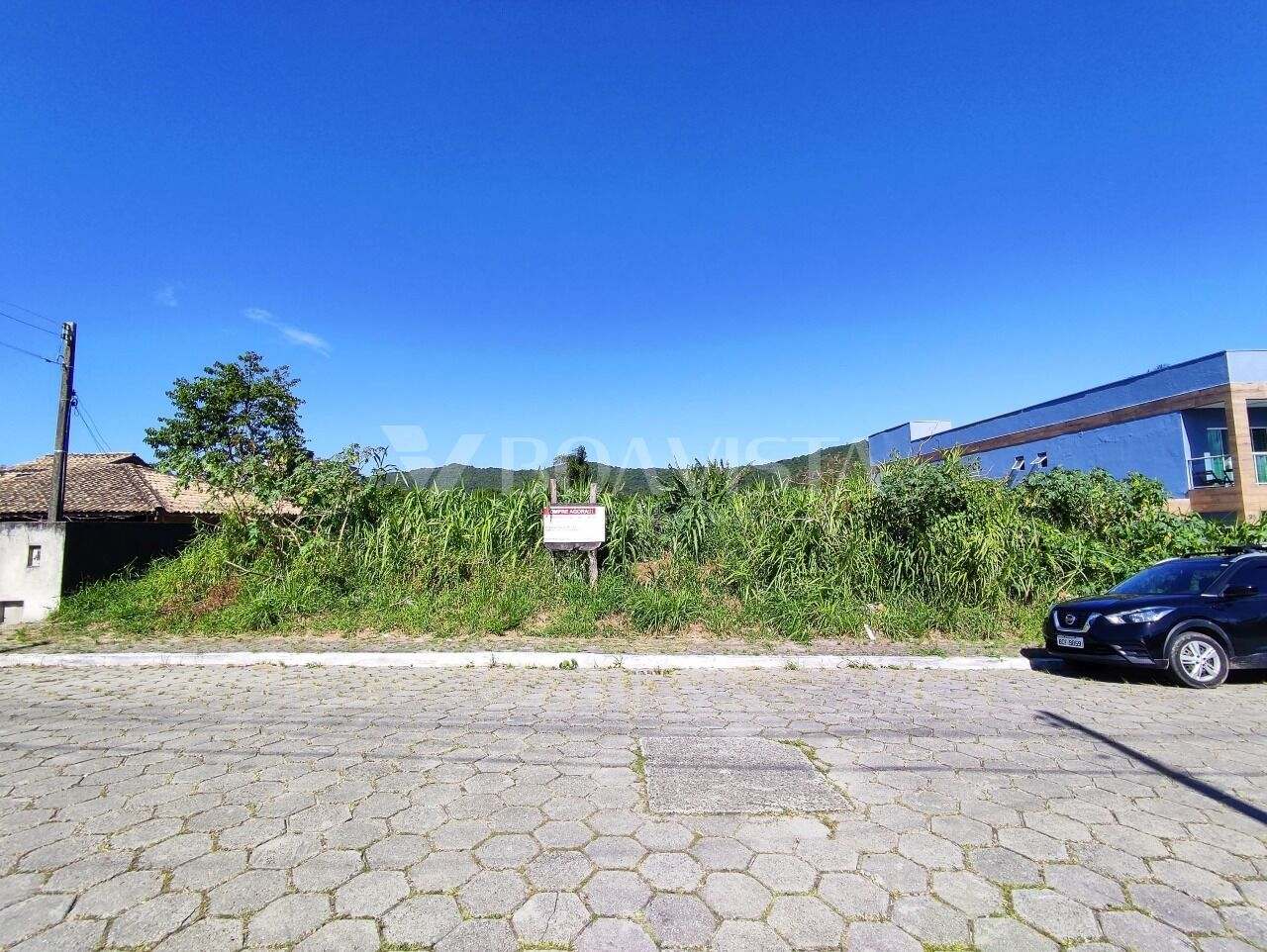
The west-facing cove where Bombinhas is still a fishing village — gentle sea, shellfish farms on the water and the best end of day on the peninsula.
Published Updated
Zimbros sits in a wide, sheltered cove on the Baía de Zimbros, with around 1.1 km of sand and a gently shelving bottom: you can wade a long way out before the water reaches your waist. The view is made of moored fishing boats, drying nets and a comings-and-goings that follows the tide rather than the tourist season.
The difference almost nobody notices until they arrive is which way the bay faces. Zimbros looks west — which is why the sun sets into the sea here, straight ahead of anyone standing on the sand. In Bombinhas, where most beaches face east, that is the privilege of only a handful of coves, and it is why the end of the day here draws the biggest crowd in town.
Out on the water, lined up in long rows at both ends of the bay, are the oyster and mussel farms. They are what explains the food: the restaurants along the front serve what came out of the sea right there, and the neighbourhood's many fishmongers sell fresh fish and just-harvested shellfish. It is one of the best price-to-freshness ratios for seafood in the region — and it's worth buying straight from the growers.
The Parque Natural Municipal da Costeira de Zimbros begins at the right-hand end of the beach: ten wild beaches reachable only on foot or by sea. The trail leaves from Praia do Cantinho and hugs the coast past the main four — Cardoso, da Lagoa, Triste and Vermelha, the largest at 618 metres of sand. Inside the park there is no camping, no fires and no dogs; motorboats must stay more than 200 metres offshore.
The Costeira trail is about 8 kilometres long, easy to moderate, and takes 3 to 5 hours just to reach Praia Vermelha — you come back the same way. As far as Praia da Lagoa it's gentler; after that the forest closes in and it takes more fitness, and the town council recommends going with a local guide. At Praia Triste a side path leads to a waterfall with natural pools; it isn't signposted, so only go with a guide. Along the way, natural viewpoints look out over the Baía de Zimbros, Governador Celso Ramos and the mouth of the Tijucas river.
Around the beach is the Zimbros neighbourhood, lived in largely by locals and holiday-home owners. It's the less touristy side of Bombinhas without giving up amenities: restaurants, fishmongers and shops along the front, and a calm sea with boats moored just offshore. If you're thinking about property, it's the neighbourhood for a house near the water, village life and the finest sunset in town from your own veranda — with a whole nature park next door that will never turn into apartment blocks.
A west-facing cove: the sun drops into the sea, straight ahead of anyone on the sand.
Shellfish farms in the cove itself supply the restaurants along the front.
Ten wild beaches, on foot or by boat only, starting at Praia do Cantinho.
Arrive an hour before sunset: it is the beach at its best, and the parking along the front is the first to fill up.
On the Costeira park trail, only go beyond Praia da Lagoa with a local guide — from there the forest closes in and the path takes more fitness.
Buy oysters and mussels straight from the growers on the waterfront: fresher and cheaper than at a restaurant table.
Outside high season the beach is quieter still — a good time to see it without the crowds.
For the trail: closed shoes, water, sunscreen and an early start — the town council advises avoiding 11 am to 3 pm and rainy days.
The route to the sand as it actually works — including the part you do on foot.
The turn-off for Bombinhas is at km 155 of the BR-101, at the Porto Belo interchange. From there it's about 14 km to town on the SC-412 state road.
The nearest airport is Navegantes, about 67 km away. Florianópolis, the state capital, is around 70 km. From either one the route is the same: the BR-101 to the Porto Belo exit.
Once in Bombinhas, head for the Zimbros neighbourhood, on the Baía de Zimbros. There's parking along the front — the first to fill up in the late afternoon, at sunset time.
The Costeira trail starts at the end of Rua Rio Piratini, at Praia do Cantinho, which carries on from the right-hand end of Praia de Zimbros. It's for walkers and bikes only — motor vehicles aren't allowed in the park.
The official code of conduct for Praia de Zimbros. Worth reading before you pack — a few of the bans catch people out.
Sports on the sand after 6 pm
Launching and landing water-sports gear between 7 pm and 9 am, at the designated spot
Pets
Camping, bonfires and barbecues
Speakers and loud music
Reserving space on the sand
Handing out flyers
Motorboats within 200 m of the beach
Location
Questions
It's one of the calmest in town. The sea is gentle and the bottom shelves slowly, so there's a good stretch of shallow water to play in. As on any beach, keep an adult close by — and watch out for the moored boats.
At the neighbourhood's many fishmongers, and straight from the growers: the shellfish farms are at both ends of the Baía de Zimbros. The restaurants along the front serve what comes out of there.
It's about 8 km, easy to moderate, and takes 3 to 5 hours to Praia Vermelha, returning the same way. It starts at the end of Rua Rio Piratini, at Praia do Cantinho. As far as Praia da Lagoa it's gentler; after that, the town council recommends going with a local guide.
There are ten, in trail order: Cardoso, Basílio, da Lagoa (also called Deserta), Casqueiro, Pasto, Lau or Hermínio, Triste, Mauri, Santa and Vermelha. The four main ones are Cardoso, da Lagoa, Triste and Vermelha, the largest at 618 metres.
You can't drive: motor vehicles aren't allowed in the park. The trail can be done on foot or by bike. The other way to reach the beaches is by sea, on a boat.
Because the bay faces west. The sun sets into the sea straight ahead of anyone on the sand — rare in Bombinhas, where most beaches face east.
Homes nearby
Keep exploring
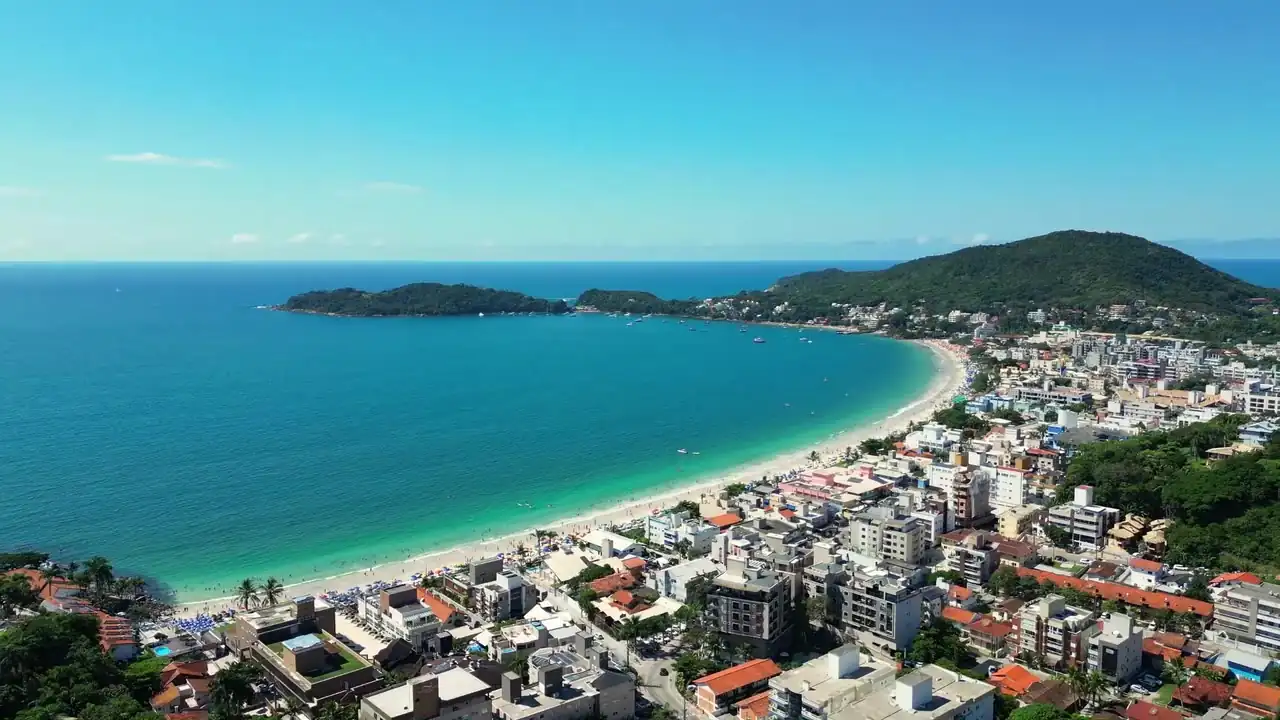
The beach that gave the town its name, and that sums up in a single cove why so many people fall for this place.
Read more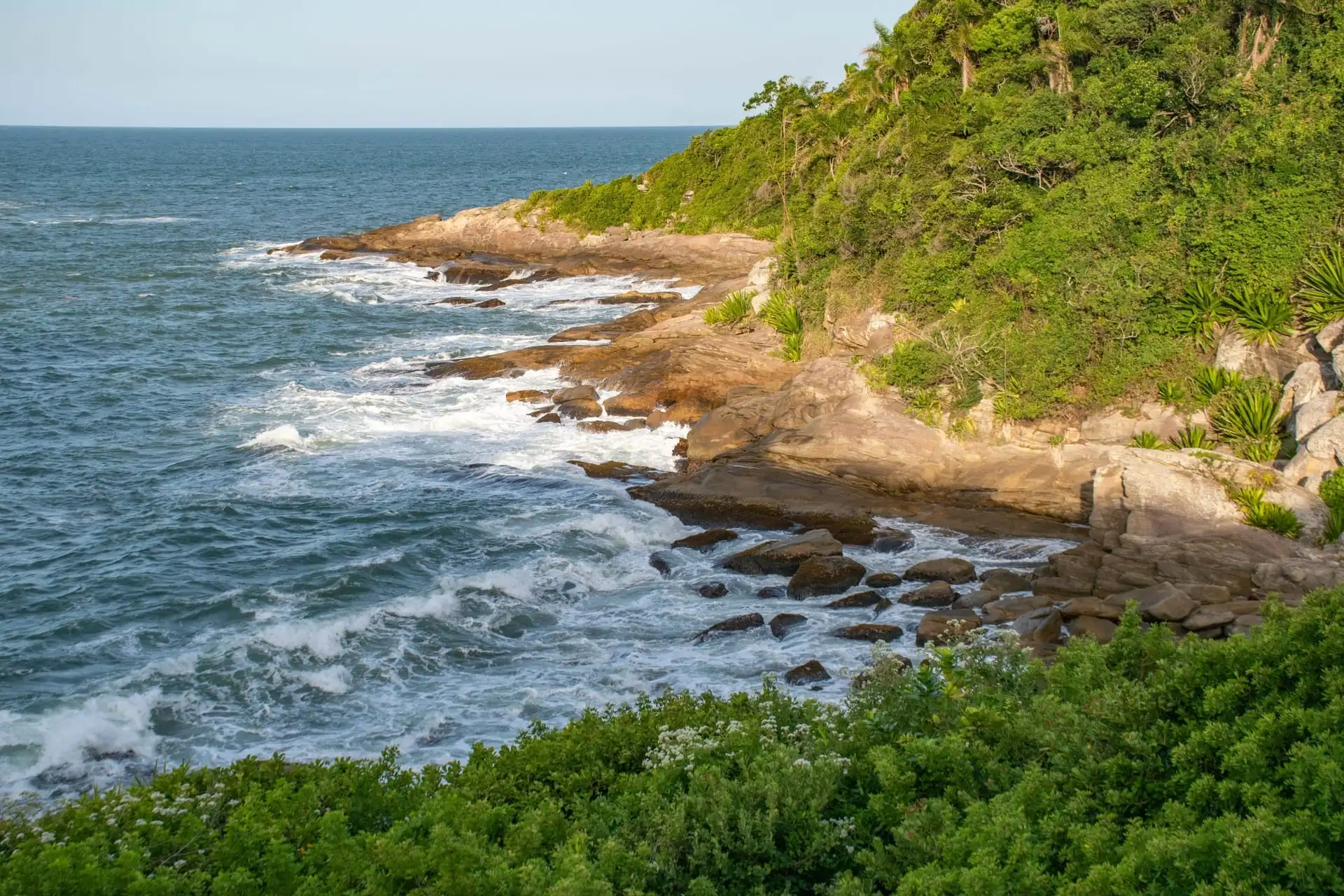
Small, sheltered and absurdly clear — probably the most photographed beach in Bombinhas.
Read more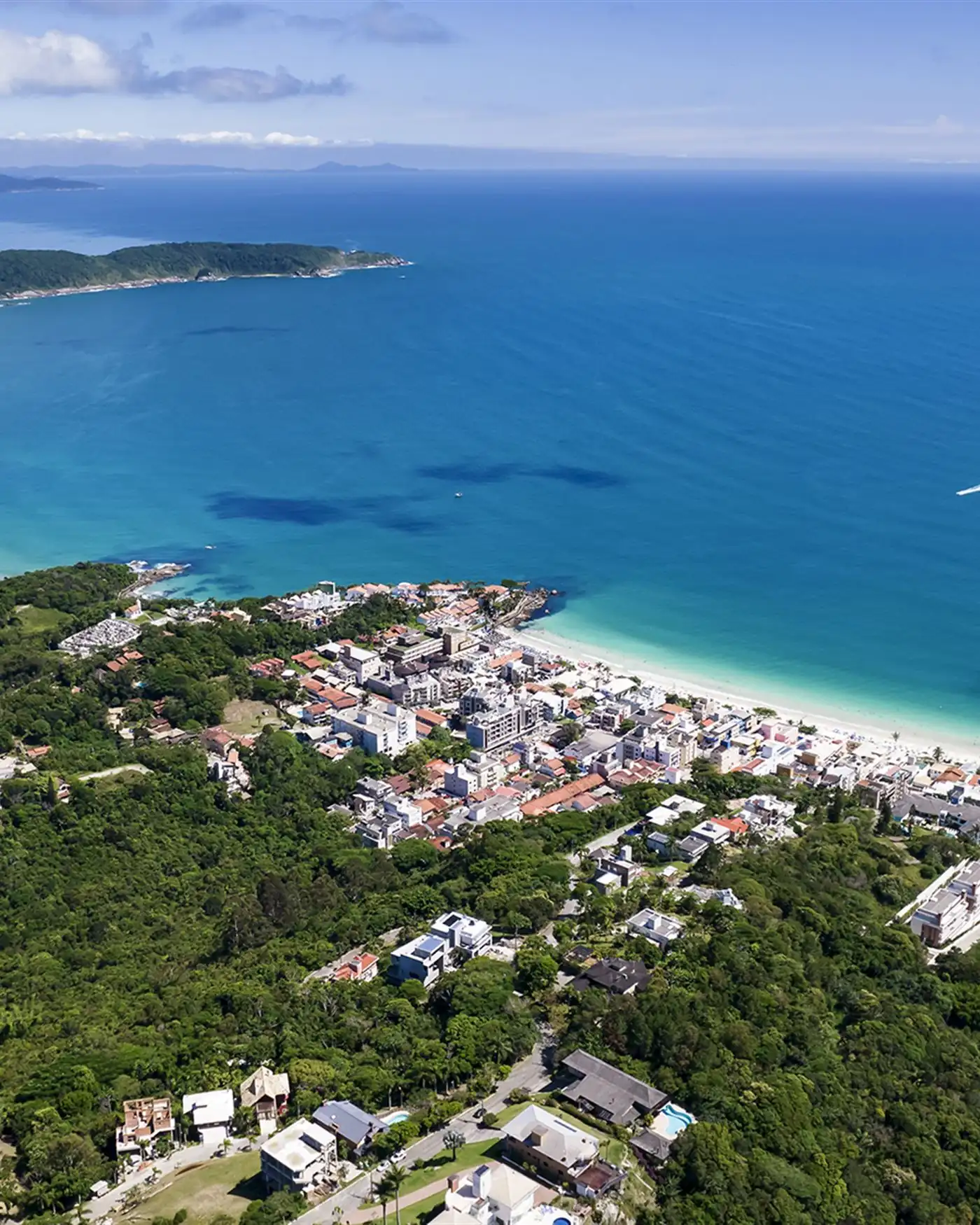
The first beach you meet arriving in Bombinhas — wide, lively and with room to spare.
Read moreLiving around here
We know every beach — and every property — in Bombinhas. Talk to our team and find your place in the sun.