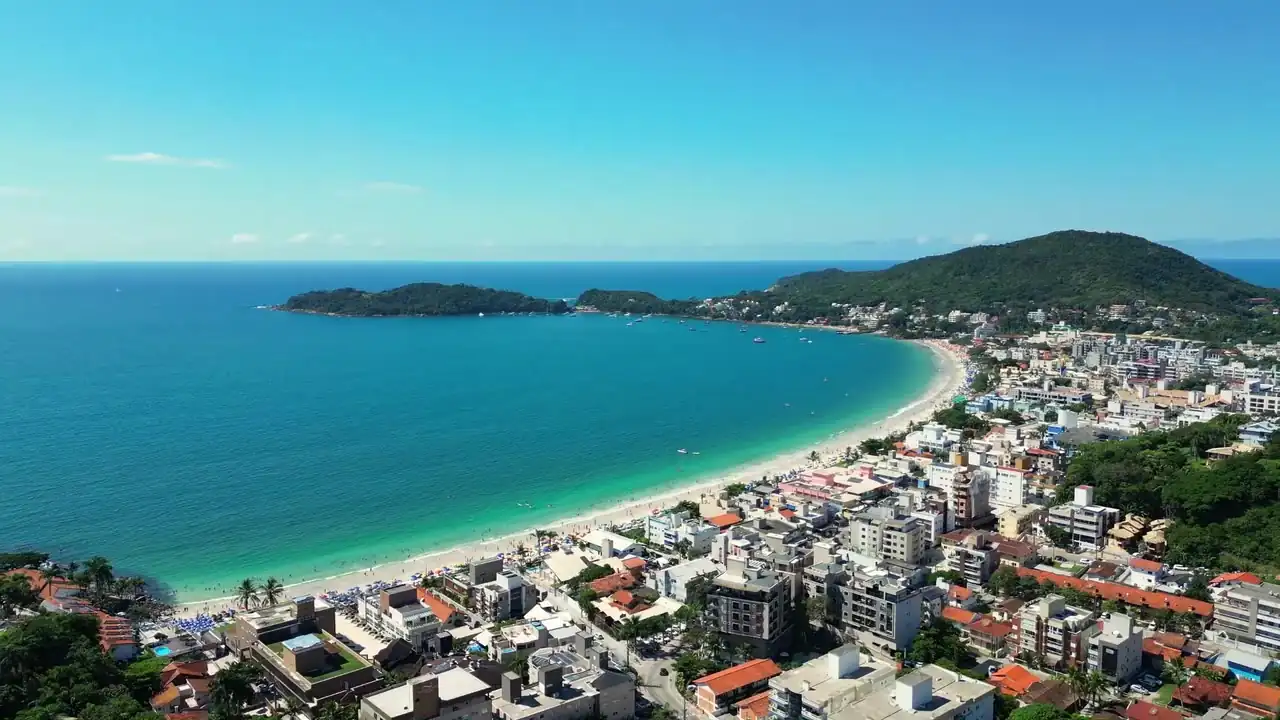
The beach old-timers still call Praia de Fora: a kilometre of sand, proper waves to the right, calm water to the left and four islands on the horizon.
Published Updated
At 1,016.56 metres of sand, Quatro Ilhas is the beach the oldest residents still call Praia de Fora. The official name comes from what you see across the water: Galé, Deserta, Arvoredo and Macuco, four ocean islands cut out along the horizon. The first three belong to the Arvoredo Marine Biological Reserve — the view from the balcony is federally protected land, and it will stay that way.
First-timers tend to assume Quatro Ilhas is only the surf beach. It has two sides, and they are very different. The right-hand headland holds the waves that made its name. On the left the sea is calm and shallow enough for snorkelling and stand-up paddle — and that is where the kiosks, the restaurants and most of the places to stay are concentrated.
The right-hand side is genuine open ocean: it takes south and south-east swell with force and works best on an offshore wind. This is competition territory, and on swell days it becomes a spectacle even if you only watch from the sand. As anywhere on an open coast, mind the lifeguards' flags and stay close in when the sea is big.
There is more here than the water. A short circular trail starts at the far right end, with wooden walkways over vegetated dunes, leading to the best viewpoints over the islands. On the seafront, Praça Mirante das Ilhas brings together a playground, an outdoor gym, a pergola and a lookout — neighbourhood infrastructure, not just beach infrastructure. And the sand still hosts the artisanal mullet fishery, a tradition that has held on there for generations.
The beach has a fishermen's story too. It's famous for the Cruz da Praia de Fora, a cross two fishermen found in the sea — and ever since, according to the town council, the sand has been a spot for traditional mullet fishing. From the same viewpoint as the four islands you can also make out the Calhau de São Pedro, a rocky islet that is likewise part of the Arvoredo Marine Biological Reserve.
Quatro Ilhas is one of the Bombinhas beaches certified under the Blue Flag programme, the international environmental-quality label it has held season after season. That comes with rules: no pets, no barbecues or fires, no speakers, and motorboats must stay more than 200 metres off the sand. It is the kind of restriction that annoys you for a weekend and pays off for decades — it is what keeps the water clean, the seafront quiet and the neighbourhood the way it is.
The right-hand headland takes south and south-east swell, and regularly hosts competitions.
On the left-hand headland the water is shallow and still — good for a mask and for stand-up paddle.
The four islands of the name. Three of them are a Marine Biological Reserve — a view protected by law.
The international environmental-quality label, held season after season.
A short circular route on wooden walkways, at the far right end of the beach.
Playground, outdoor gym, pergola and a lookout, right on the seafront.
For a calm swim with children, stay on the left-hand headland — the water there is still and shallow. The surf is on the right.
Bring a mask and snorkel: the rocks on the left-hand side deliver good encounters without needing a boat.
The dune trail at the far right end is short and circular — go late in the day, when the islands stand out most.
Mind the lifeguards' flags and stay close in on big-sea days.
No pets, barbecues, fires or speakers on this beach — it is part of what keeps the Blue Flag.
Sport on the sand only after 6pm: that is the local code of conduct, and it is when the beach empties out.
The route to the sand as it actually works — including the part you do on foot.
The turn-off for Bombinhas is at km 155 of the BR-101, at the Porto Belo interchange. From there it's about 14 km to town on the SC-412 state road.
The nearest airport is Navegantes, about 67 km away. Florianópolis, the state capital, is around 70 km. From either one the route is the same: the BR-101 to the Porto Belo exit.
You get there on a paved road, with parking along the seafront. For calm swimming, snorkelling or the restaurants, head for the left-hand side; for surfing or the trail, the right.
At the right-hand end of the beach begins the easy circular trail, with wooden boardwalks over the vegetated dunes. It takes you to the island viewpoints and brings you back to where you started.
The official code of conduct for Quatro Ilhas. Worth reading before you pack — a few of the bans catch people out.
Sports on the sand after 6 pm
Launching and landing water-sports gear between 7 pm and 9 am, at the designated spot
Pets
Camping, bonfires and barbecues
Speakers and loud music
Reserving space on the sand
Handing out flyers
Motorboats within 200 m of the beach
Gallery
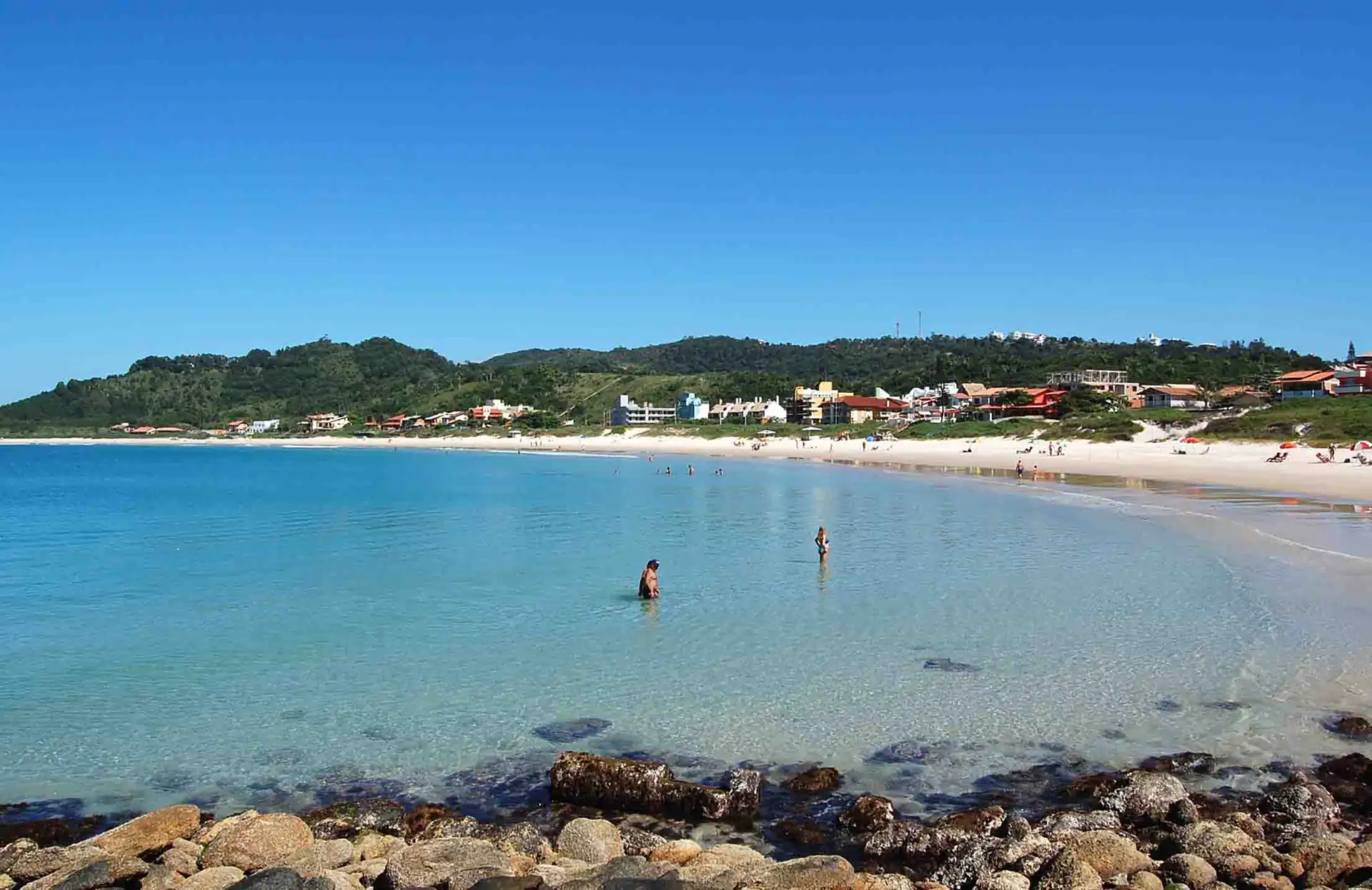
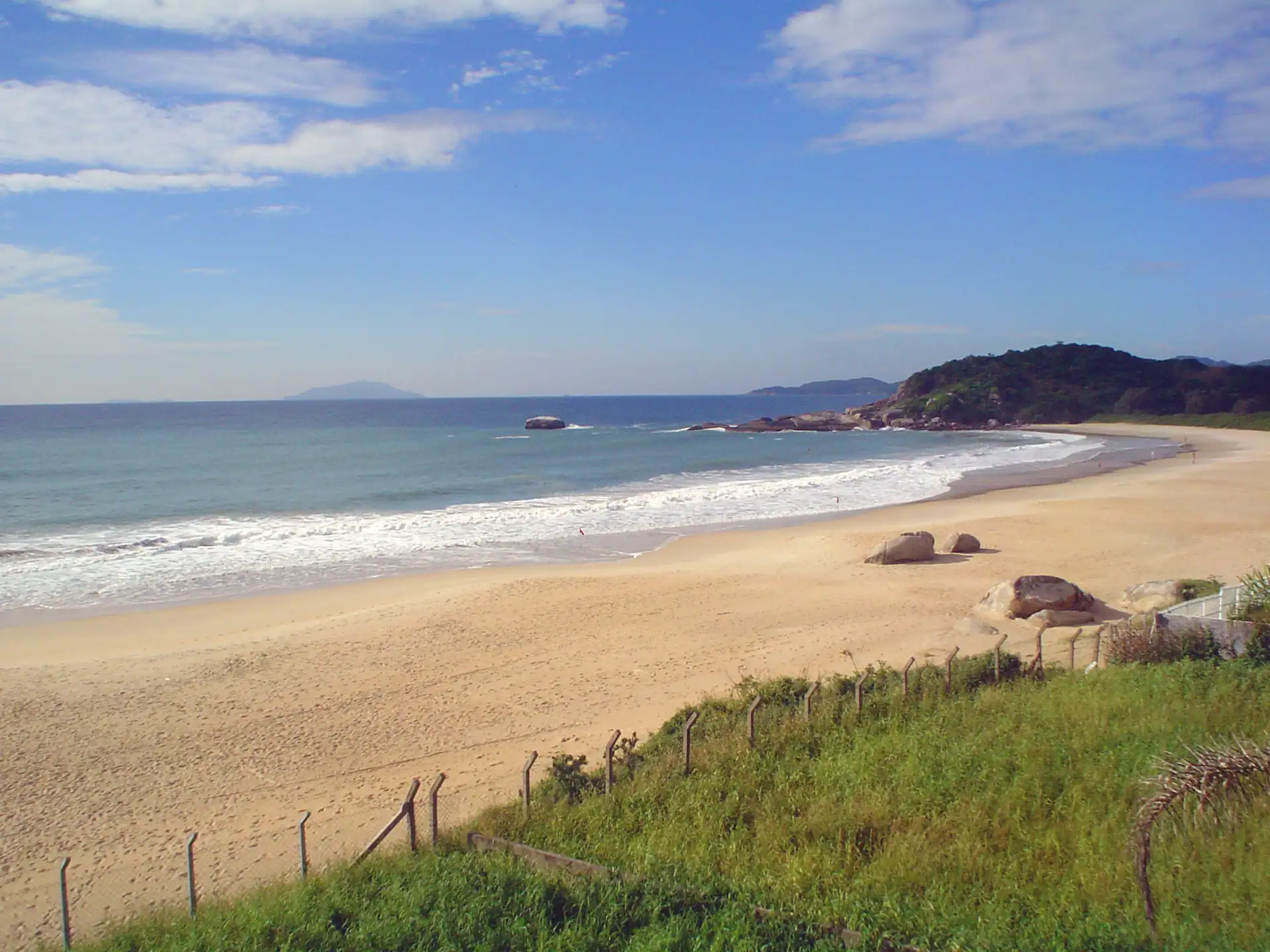
Photo: Leonardo Pallotta (CC BY 2.0)
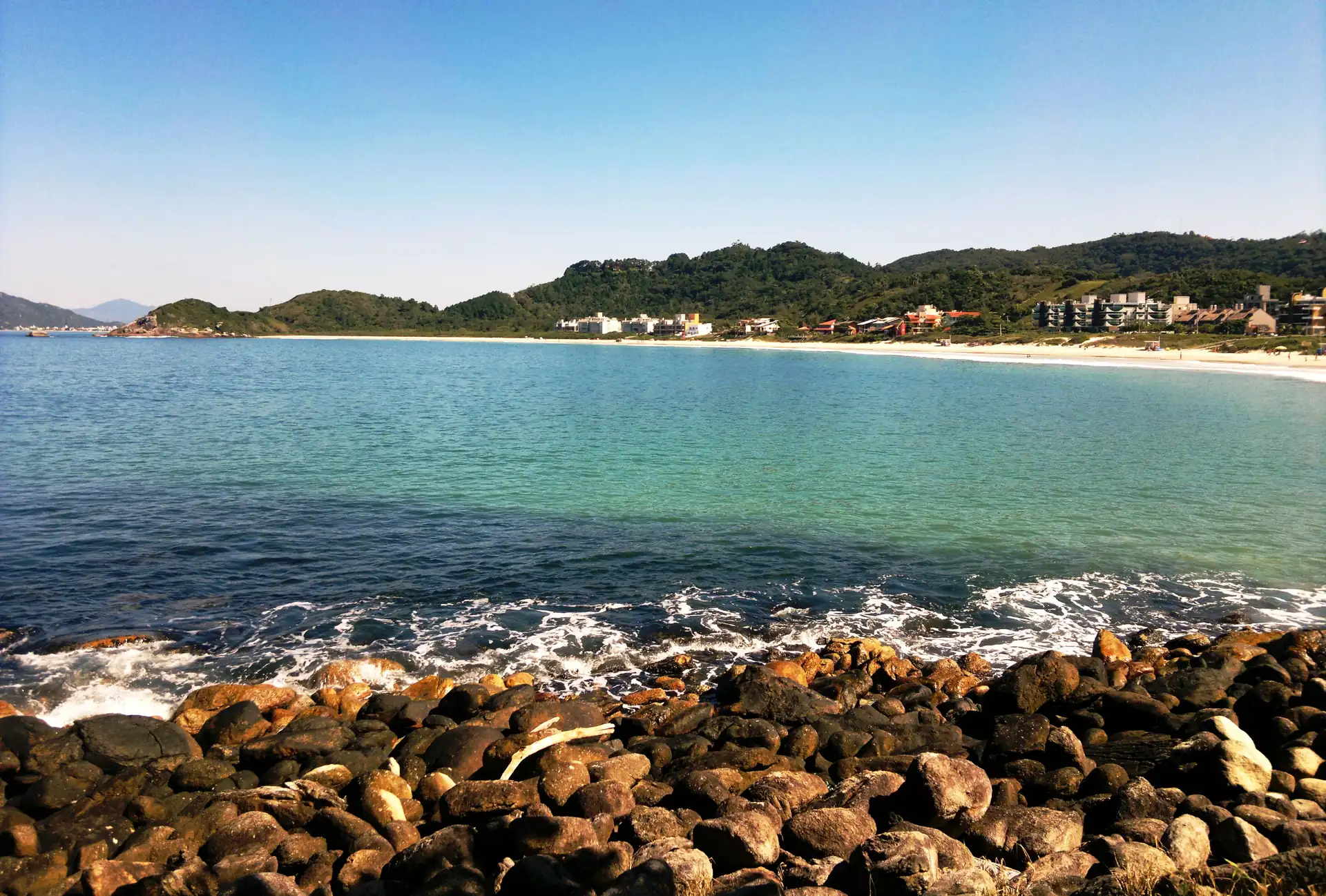
Photo: caetano051068 (CC BY-SA 3.0)
Location
Questions
Yes, as long as you pick the right side. By the left-hand headland the water is calm, good for snorkelling and stand-up paddleboarding, and that's where the kiosks and restaurants are. The right-hand headland has surfing waves — not a place for little ones to go in on their own.
It's one of the main surf beaches in Bombinhas. The waves are at the right-hand headland, which takes the open-ocean swell. On rough days, follow the lifeguards' flags.
Yes. According to the town council, the beach has public toilets, accessibility and a lifeguard service. On the seafront, the Praça Mirante das Ilhas has a playground, an outdoor gym, a pergola and a viewpoint.
Easy and circular, with wooden boardwalks over the vegetated dunes at the right-hand end of the beach, which is fully preserved. It's the walk to see the islands from above.
No. The beach's code of conduct bans pets on the sand, as well as barbecues, bonfires and speakers. These rules are part of the management behind the Blue Flag.
Galé, Deserta, Arvoredo and Macuco. The first three are part of the Arvoredo Marine Biological Reserve, along with the Calhau de São Pedro, which you can also see from the beach. As a biological reserve it isn't open for free visits: boat trips and dives from Bombinhas go to the permitted spots, such as the south side of Arvoredo Island.
Homes nearby
Keep exploring
The beach that gave the town its name, and that sums up in a single cove why so many people fall for this place.
Read more
Small, sheltered and absurdly clear — probably the most photographed beach in Bombinhas.
Read more
The first beach you meet arriving in Bombinhas — wide, lively and with room to spare.
Read moreLiving around here
We know every beach — and every property — in Bombinhas. Talk to our team and find your place in the sun.