Bombinhas guide
Diving by the Arvoredo Marine Biological Reserve, trails that end at lookouts over the sea, boat trips, surf, traditional fishing and food from the sea. A guide from people who live here, one activity at a time.
Bombinhas is known as Santa Catarina's capital of eco-diving, and the reason lies a few miles offshore: the Arvoredo Marine Biological Reserve. Created in 1990 and managed by ICMBio, Brazil's federal conservation agency, it protects the islands of Arvoredo, Galé and Deserta and the Calhau de São Pedro rock, and plays a key role in fish breeding along this stretch of coast. That protected sea is why the water around Bombinhas is so rewarding for anyone who puts on a mask.
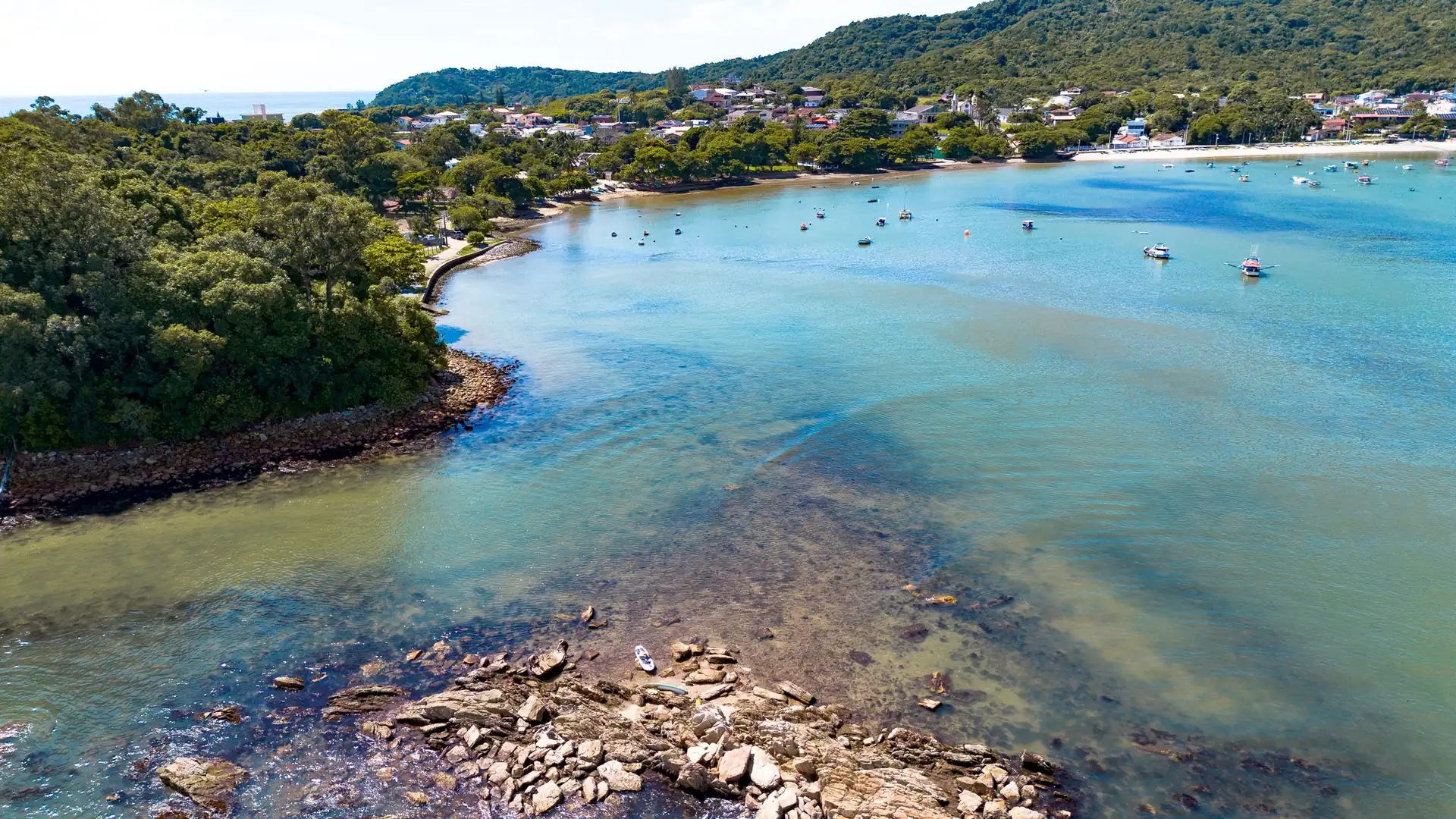
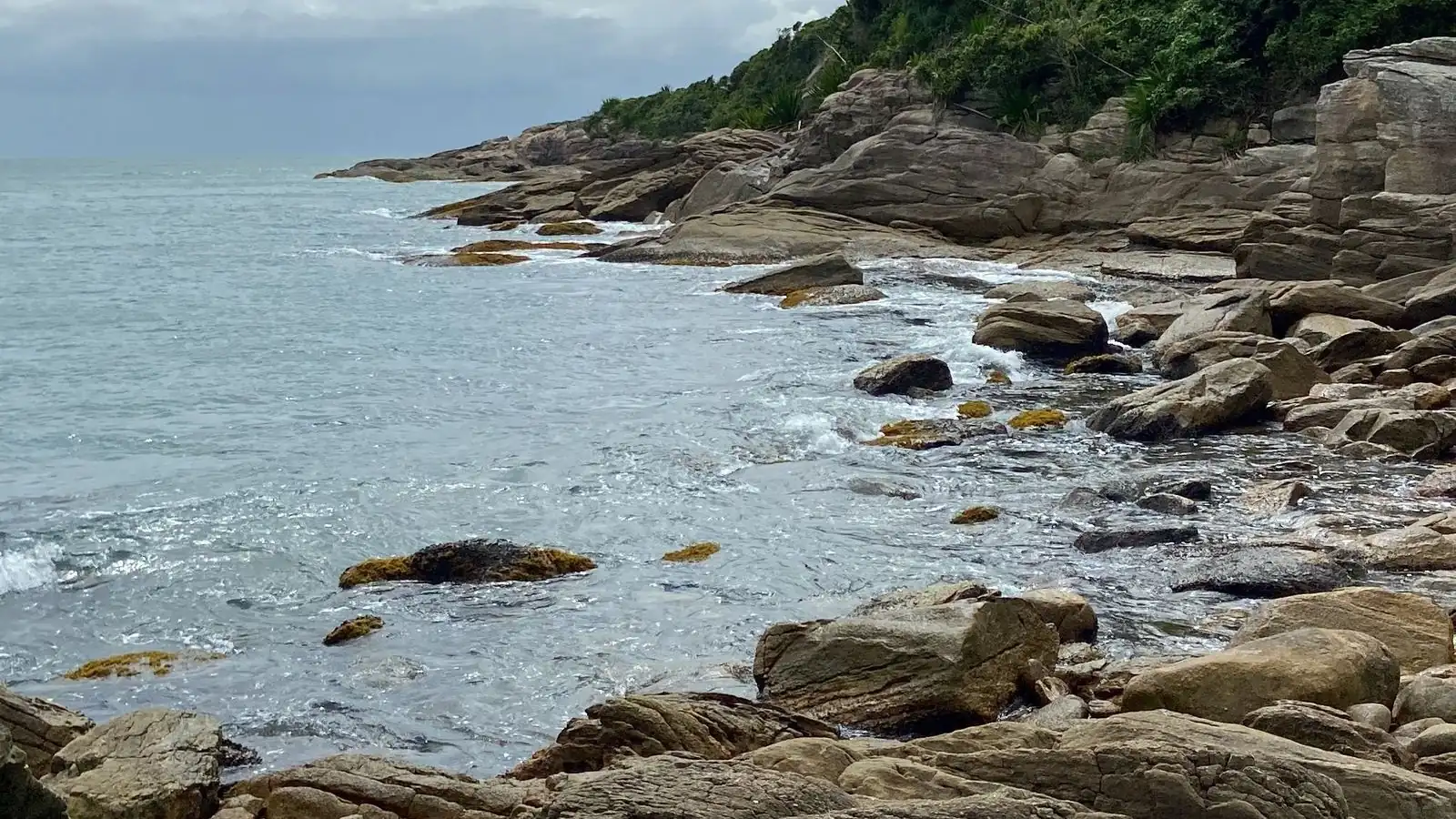
But you don't have to go far to see fish. The rocky headlands of the sheltered coves hold marine life a few meters from the sand, and much of the diving in Bombinhas starts with your feet on the beach.
As a biological reserve, a strictly protected federal area, Arvoredo is closed to visitors: access is restricted to research and environmental education, with authorization from ICMBio. Recreational diving takes place in the south of Arvoredo Island, by the Navy lighthouse, in an area outside the reserve's boundaries. That's where the town's dive operators head on their daily trips, along with the rocky headlands of the peninsula.
Within town, Sepultura is the best snorkeling spot: a short cove sheltered by two rocky headlands, with green, almost still water. Marine life shows up in the first few meters, and at the back of the cove lies Bio Vida III, an underwater sculpture by artist Pita Camargo. Praia de Bombinhas and the left-hand headland at Quatro Ilhas also reward snorkelers with good schools of fish.
If you've never dived with a tank, you can try a discover dive: a first scuba experience in calm, shallow water, with an instructor who provides the gear and explains the basics — no certification needed. The town's operators teach both beginners and experienced divers.
Where it happens
Seeing Bombinhas from the water is how you understand the peninsula: the headlands, the hidden coves and the islands on the horizon only show themselves fully from on board. Several companies run boat trips in two styles: relaxed ones, for taking in the scenery, and adventure trips with pirates, designed to entertain the whole family. Schooners leave from Mar de Dentro in Canto Grande, among other spots.
In Zimbros Bay, some tours cross the oyster and mussel farming areas and show up close how mariculture works. And for divers, the operators run daily boat trips to the peninsula's headlands and to the south of Arvoredo Island.
Where it happens
Bombinhas is a peninsula of hills covered in Atlantic Forest, and nearly every trail here ends with the same reward: the sea seen from above. Two municipal conservation areas hold the best routes — Morro do Macaco Municipal Natural Park, in Canto Grande, and Costeira de Zimbros Municipal Natural Park, in the south of the peninsula.
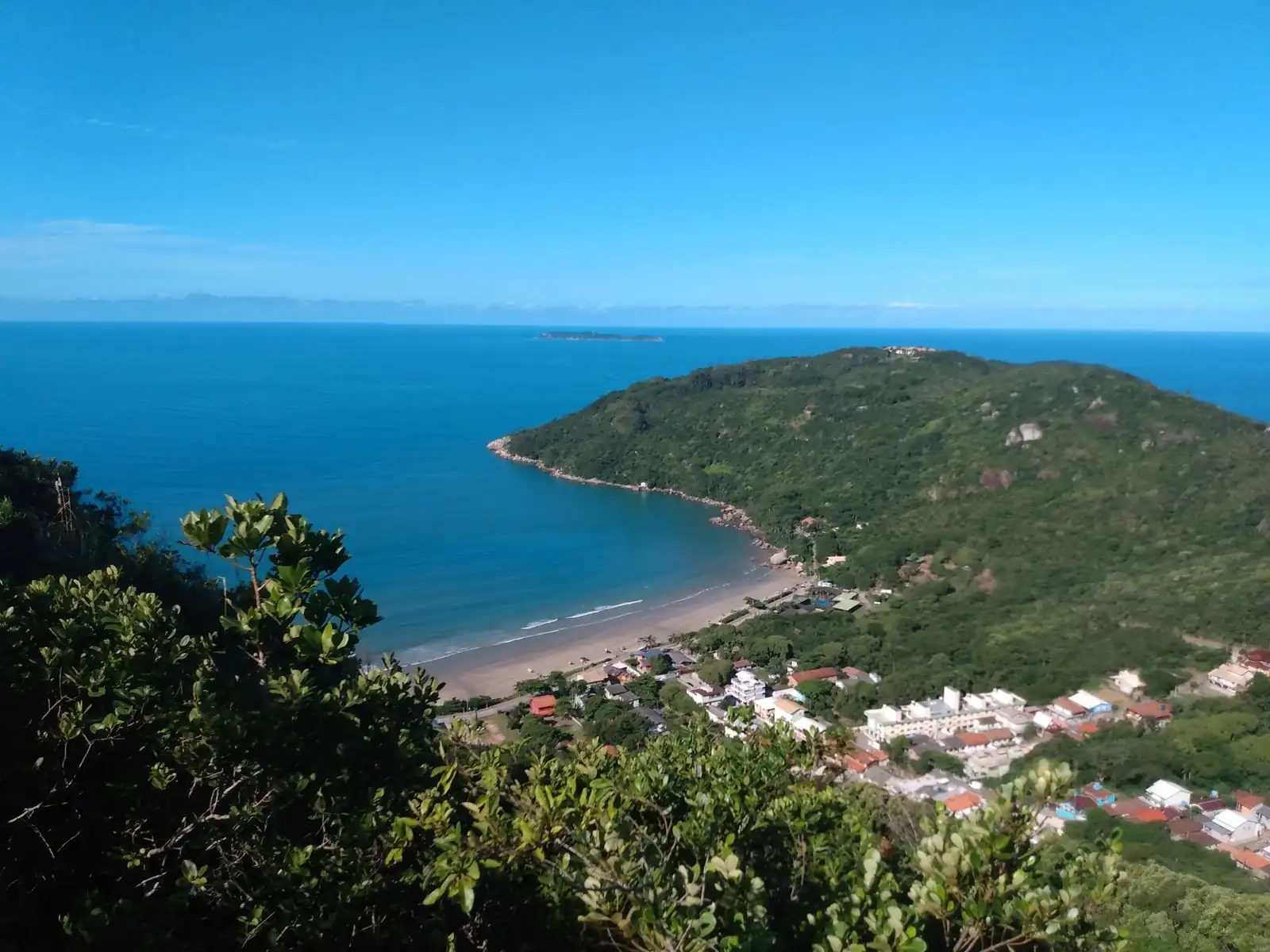
The Morro do Macaco trail is in Canto Grande, Bombinhas (SC). It's a moderate hike, about 1,200 meters of steep climb. Access is free and it takes 30 to 50 minutes to reach the top, which rewards you with 360-degree panoramic views.
It starts at the same Morro do Macaco gateway, on Rua Jequitibá in Canto Grande, and runs through the forest to Praia da Tainha, passing Praia da Aguada. It's about 5.1 km round trip, at a moderate level, suited to people in good shape who are used to hiking.
The longest trail in town: about 8 km one way, 3 to 5 hours to Praia Vermelha, returning the same way. It starts at Praia do Cantinho, at the right-hand end of Zimbros, and passes wild beaches that can only be reached on foot or by sea — Cardoso, da Lagoa, Triste and Vermelha are the main ones. It's easy to moderate as far as Praia da Lagoa and gets more overgrown beyond it.
On the same ridge, 218 meters above sea level, is the Mirante Eco 360° lookout, on the road to Praia da Tainha. Entry is paid and the climb to the top takes about 15 minutes. From the top of Morro do Macaco and the lookout you can see Canto Grande, Mariscal, Quatro Ilhas, Zimbros and the islands of the Arvoredo reserve.
Where it happens
Not all of Bombinhas' sea is a swimming pool. The beaches facing the open ocean get real swell, and two of them are the heart of the local surf: Quatro Ilhas and Mariscal.
At Quatro Ilhas, the right-hand headland picks up south and southeast swell and often hosts competitions; the left side, calm and shallow, is the place for stand up paddle and snorkeling. Mariscal, the longest beach in town, is open sea with waves along the sand. In the still water of Mar de Dentro, in Canto Grande, paddling is easy.
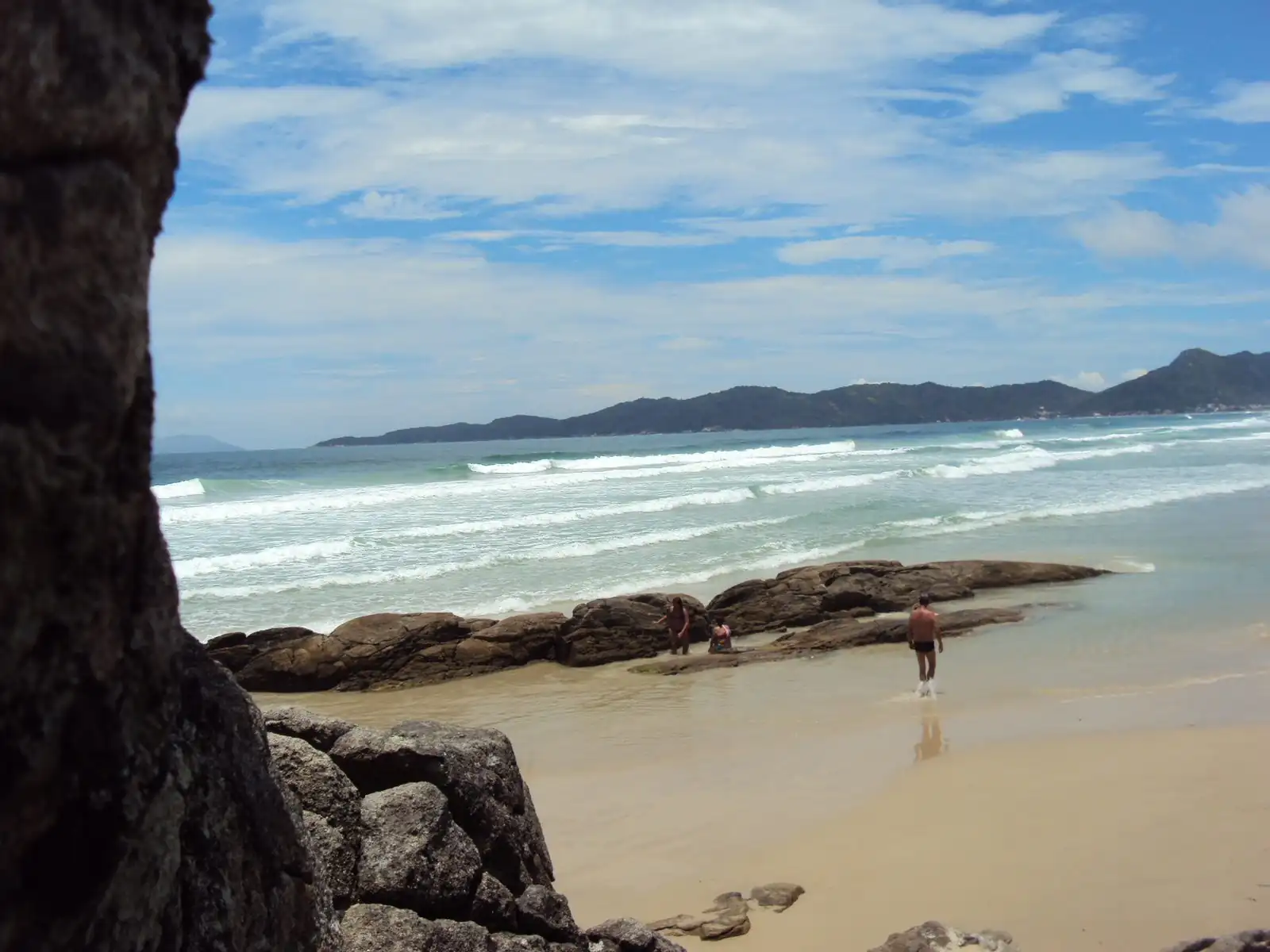
Photo: W.Feistler — CC BY-SA 3.0
Where it happens
Before tourism, Bombinhas was a land of fishermen and farmers of Azorean heritage, and that past is still in plain sight if you know where to look.
In Sertãozinho, the Engenho do Sertão Community Museum keeps objects and stories from the Azorean settlement period and keeps alive the food, folklore and customs of Bombinhas. On the visit, guided and by appointment, you can taste consertada — a drink of cachaça, coffee and spices recognized as the town's cultural heritage — and cassava beiju.
Between May 1 and July 31, mullet (tainha) fishing takes over the beaches. Lookouts posted on the sand spot the school and alert the fishermen; dugout canoes carved from a single trunk take the net out to sea, and the haul is pulled in from the beach by the fishermen and anyone who wants to lend a hand. The tradition has Indigenous roots, is passed down through generations and is recognized as cultural heritage of Bombinhas and of Santa Catarina.
Where it happens
Cooking in Bombinhas starts in the water. The sheltered waters of Zimbros Bay and Canto Grande are home to the town's mariculture, and Bombinhas is among the largest producers of farmed shellfish in Santa Catarina. In Zimbros you can buy fresh fish and shellfish just harvested from the sea farms, and the town's restaurants serve what is grown here.
Menus along the waterfront revolve around the sea: shrimp tasting menus, grilled fish, oysters raw or au gratin, mussels vinaigrette. In winter, mullet from the beach haul shows up roasted, butterflied or stuffed.
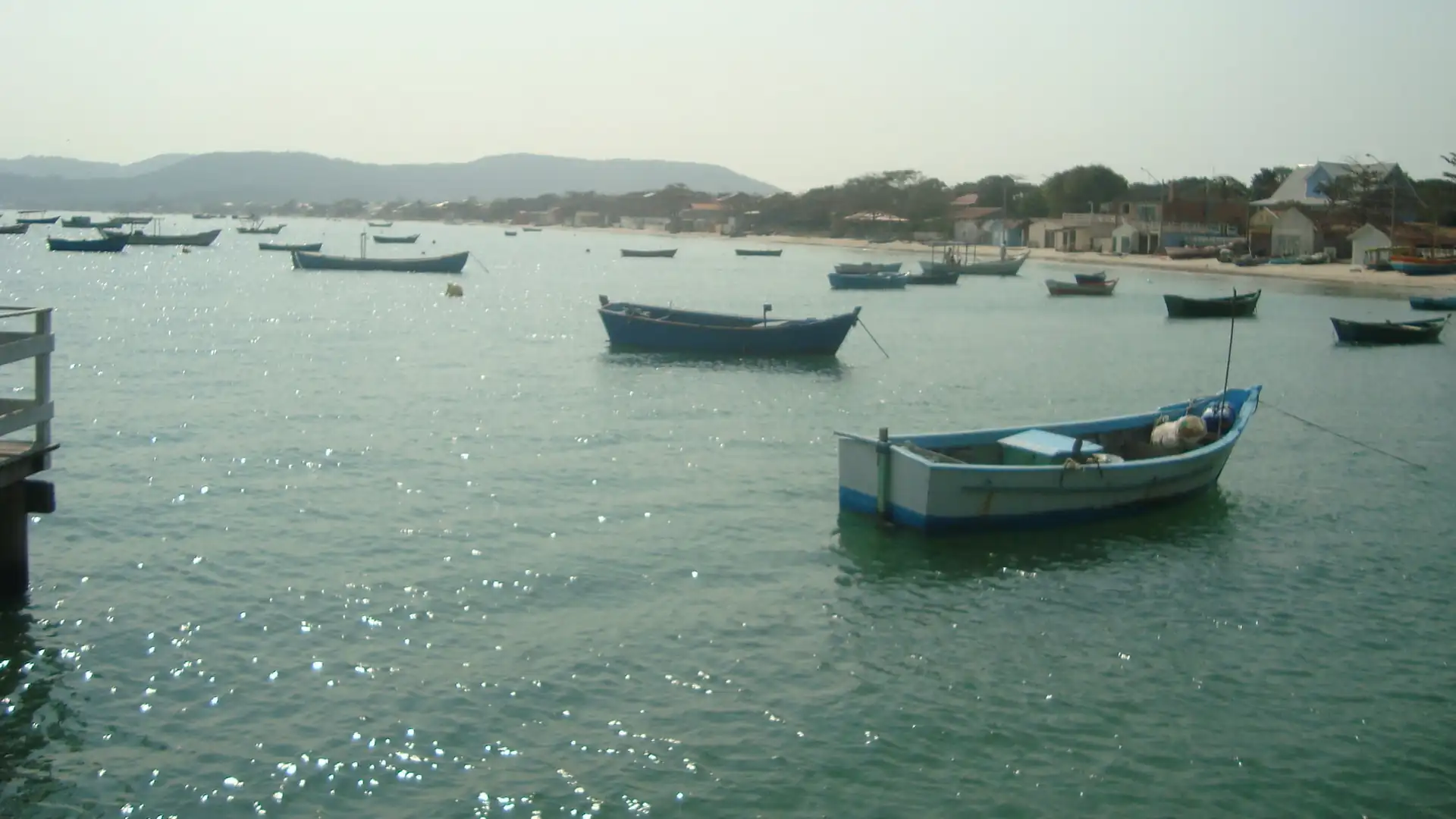
Photo: Mauro Soares (CC BY-SA 3.0)
Where it happens
To watch the sun rise out of the sea, the beaches to go to are Quatro Ilhas, Mariscal and Canto Grande Mar de Fora. Sunset is special on the beaches of Zimbros Bay: Zimbros, Morrinhos and Mar de Dentro in Canto Grande are the settings for the end of the day. And from the top of Morro do Macaco you can see both, with the whole peninsula around you.
For photos, the same views that reward the trails: the top of Morro do Macaco and Mirante Eco 360°, with the reserve's islands on the horizon. At sea level, the green water of Sepultura, framed by rocks and forest, is one of the most photographed postcards of Bombinhas, and the short boardwalk trail over the dunes at Quatro Ilhas leads to the best views of the islands.
Where it happens
Opening hours, prices and access rules change: check with the managing body before you go.
Living here
We know every beach — and every property — in Bombinhas. Talk to our team and find your place in the sun.
